Digital Products: Are They Worth Buying? (Honest Truth)
In the rapidly evolving digital landscape of 2026, the global economy has shifted significantly toward intangible assets. The question “Are digital products worth buying?” is no longer just for tech enthusiasts; it’s a question every modern consumer must face. From $5 e-books to $5,000 professional certification courses and complex software subscriptions, the market is overflowing. But does spending your hard-earned money on something you can’t physically touch offer real value?
This honest analysis dives deep into the world of digital products to help you determine if they are a smart investment or a waste of resources.
What Are Digital Products?
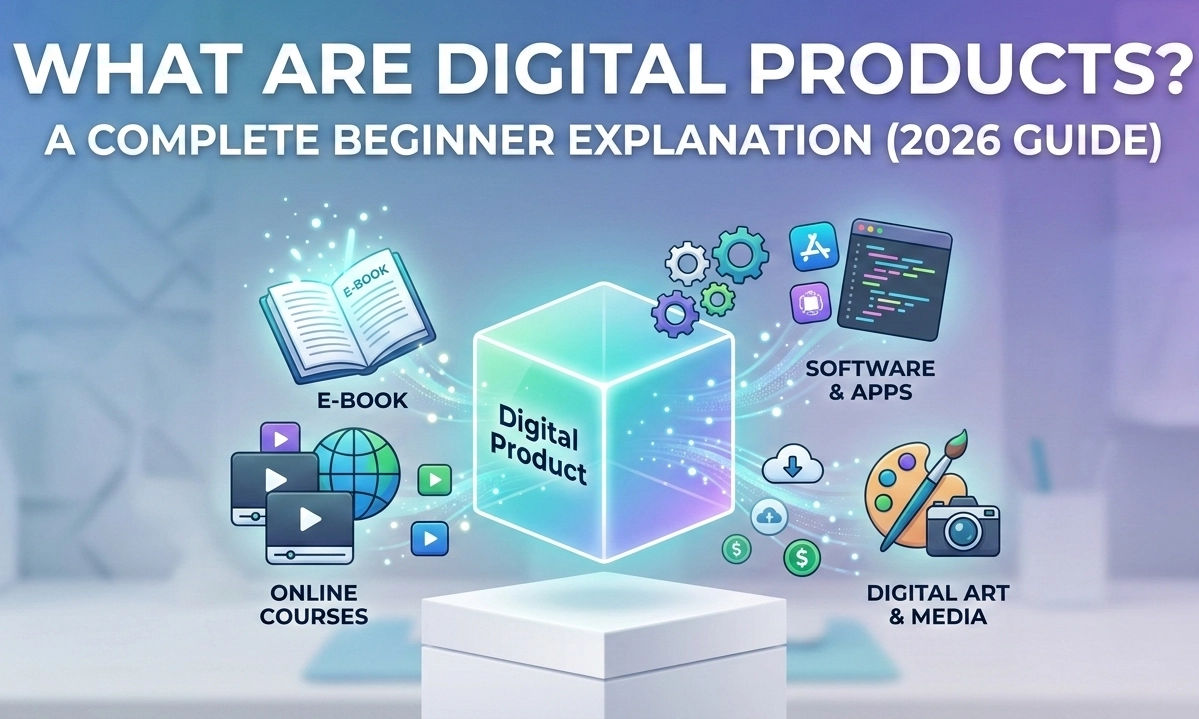
Before assessing their value, it is essential to define what we mean by digital products. Essentially, these are assets or media that exist exclusively in digital form. They are typically downloaded, streamed, or accessed via a portal. Unlike physical goods, they have no physical dimensions and require a device—like a smartphone, laptop, or e-reader—to be consumed.
According to a recent Digital Market Outlook report, the consumption of these assets is projected to hit record highs this year. Common examples include:
Educational Materials: Online courses, masterclasses, and PDF guides.
Software and Apps: SaaS (Software as a Service) like Adobe Creative Cloud or productivity apps.
Entertainment: Digital music (MP3s), streaming movies, and video games.
Creative Assets: Stock photos, fonts, templates, and digital art.
Digital Tools: WordPress themes, SEO plugins, and automation scripts.
The Incredible Benefits of Buying Digital Products
1. Instant Access and Convenience
One of the strongest arguments for digital products is the speed of delivery. In a world where time is the most precious commodity, the ability to receive a product the millisecond you pay for it is invaluable. There are no shipping delays, no “out of stock” notifications for popular items, and no need to leave your home.
2. No Physical Storage or Maintenance
If you are a minimalist or live in a small space, digital products are a dream. You can own a library of 10,000 books or an entire discography of a band without taking up a single inch of shelf space. Furthermore, digital items don’t gather dust, they don’t break if you drop them, and they don’t require physical cleaning.
3. Lower Costs and High Accessibility
Since creators don’t have to deal with manufacturing or shipping, digital products are often priced lower than physical ones. This makes high-level education accessible worldwide. To learn how to spot the best deals, read our guide on how to find trusted digital product sellers.
4. Continuous Updates and Improvements
When you buy a physical book or tool, that’s it. It stays in the condition you bought it. However, many digital products, especially software and online courses, come with lifetime updates. When the creator discovers a bug or updates their strategy for 2026, you get the latest version for free.
The Potential Drawbacks: Why You Might Hesitate
While the market for digital products is vast, it isn’t without its flaws. Here are a few things to consider before hitting the ‘buy’ button:
1. The “Ownership” Illusion
When you buy a physical DVD, you own that plastic disc. When you buy a digital movie on some platforms, you are often buying a license to view it. If the platform goes out of business, your access could vanish. This lack of permanent ownership is a major point of debate in the digital age.
2. Lack of Resale Value
Physical items can be sold on eBay or at a garage sale. Digital products rarely have a resale market. Once you buy a $500 digital course, it is generally yours forever, but you cannot recoup your investment by selling it to someone else once you are finished.
3. Psychological Disconnect
Some consumers struggle to find value in things they cannot touch. This “tangibility gap” often leads to “digital hoarding,” where people buy dozens of digital products—like courses or templates—and never actually use them because they don’t feel “real.”
Are Digital Products a Good Investment? (The ROI Factor)
To determine if digital products are worth it, you must evaluate the “Return on Investment” (ROI). This is especially true for educational and professional assets.
-
Case Study: The $200 Course: If you spend $200 on a course that teaches you a specific skill—say, SEO-optimized content writing—and that skill allows you to earn $2,000 in freelance gigs, that digital product was worth its weight in gold.
-
The Entertainment Factor: If you pay $15 for a digital video game that provides 100 hours of enjoyment, the cost-per-hour is incredibly low compared to a movie ticket or a physical theme park.
When evaluating digital products, ask yourself:
-
Does it solve a problem I currently have?
-
Is the creator an authority in their field?
-
Does the product offer a community or support group?
-
Can I verify the results through third-party reviews?
Navigating the 2026 Digital Marketplace: How to Buy Smart
The ease of creation means the market is also filled with “fluff” or low-quality items. To ensure your money is well-spent on digital products, follow these steps:
Check for Social Proof: Don’t just read the testimonials on the seller’s website. Look at independent forums, Reddit, or YouTube for unbiased reviews. Verify the Refund Policy: Reputable sellers of digital products usually offer a “no-questions-asked” 7-day or 30-day money-back guarantee. If a seller has no refund policy and no social proof, be cautious. Assess the Format: Is the product delivered in a format you can actually use? There is no point in buying a high-end software package if your computer doesn’t meet the system requirements.
Conclusion: The Final Verdict
So, are digital products worth buying?
The answer is a resounding yes, but with a caveat: you must be a conscious consumer. In 2026, digital products represent the most efficient way to learn, grow, and be entertained. They democratize information and provide tools that were once only available to large corporations.
However, because the barrier to entry for creators is low, the burden of “filtering” quality falls on you, the buyer. Don’t buy into the hype or the flashy marketing funnels. Instead, buy into the solutions that offer tangible growth or genuine joy.
Frequently Asked Questions (FAQ)
Can I get a refund on digital purchases?
Refund policies vary by creator. Most high-quality platforms offer a 14 to 30-day guarantee to ensure customer satisfaction. Always read the terms and conditions before purchasing.
Do I own a digital product forever?
In most cases, you own a lifetime license to access the material. However, it is always a good idea to download and back up any files (like e-books or templates) to your own personal cloud storage or hard drive.
How do I know if a digital seller is trustworthy?
Look for “Verified” badges, check their social media presence, and see if they have a history of providing value through free content (like blogs or YouTube videos) before you buy their paid products.
Are digital books better than physical books?
This is subjective. Digital books are superior for portability, searching for specific terms, and instant access. Physical books are better for reduced eye strain and having a collectible item.
Is the digital product market still growing?
Yes, the market for digital products is expected to continue expanding as more people move toward remote work and online education as their primary lifestyle.
Read more : 5 Best Safe Payment Methods for Buying Digital Products in 2026