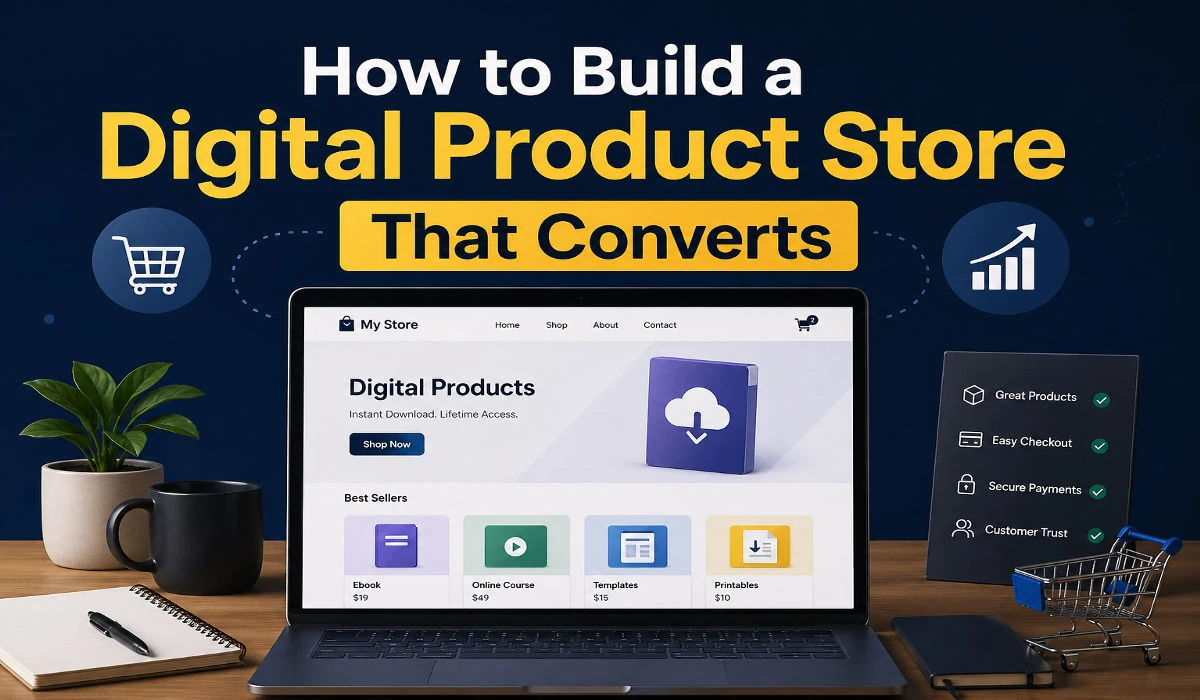
Setting up an online shop is easy, but making sales is the real challenge. In the digital economy of 2026, customers are more discerning than ever. If you want to succeed, you need more than just a “Buy Now” button. You need a strategy centered on how to build a digital product store that converts traffic into revenue consistently.
In this comprehensive guide, we will explore the technical, psychological, and design elements required to create a high-converting digital storefront.
Prioritize “Frictionless” User Experience (UX)
The first rule of how to build a digital product store that converts is to remove all barriers. Every extra click is a chance for a customer to leave.
One-Click Checkout: Use platforms that support Apple Pay, Google Pay, or crypto-wallets for instant purchases.
Speed Optimization: A 1-second delay in mobile load time can decrease conversions by 20%. Ensure your hosting and image compression are top-tier.
Crafting High-Impact Product Pages
When people search for how to build a digital product store that converts, they often overlook the importance of the product description. In 2026, a simple bulleted list isn’t enough.
The “Hero” Visual: Use high-quality mockups that show your digital product in action (e.g., an ebook on a tablet or a LUT on a professional photo).
Benefit-Driven Copy: Instead of listing “10 Video Lessons,” say “Master Advanced SEO in under 2 hours.”
The Power of Social Proof and Trust Signals
Trust is the currency of the internet. To understand how to build a digital product store that converts, you must understand “Social Proof.”
Verified Reviews: Display real screenshots of customer feedback.
Trust Badges: Include security icons and “Money Back Guarantee” badges near the checkout button.
Live Sales Notifications: Small pop-ups showing that “Saziya from Dhaka just purchased this” can significantly boost urgency.
Implementing Strategic Upsells and Order Bumps
If you want to know how to build a digital product store that converts at a high profit margin, look at your “Average Order Value” (AOV).
Order Bumps: A small checkbox at checkout offering a $7 checklist to complement a $47 course.
Post-Purchase Upsells: Once they buy, offer a one-time discount on a related high-ticket product.
Mobile-First Design and Responsive Layouts
In 2026, over 80% of digital product purchases happen on mobile devices. If your store looks clunky on a smartphone, you are losing money. A core pillar of how to build a digital product store that converts is ensuring that your navigation menus, buttons, and text are perfectly scaled for mobile users.
Leveraging Email Automation for Cart Recovery
Not every visitor will buy on their first visit. To truly master how to build a digital product store that converts, you must have an “Abandoned Cart” sequence. An automated email sent 1 hour after a user leaves their cart can recover up to 15% of lost sales by offering a small discount or answering common objections.
Read More: Opportunities for New Sellers in 2026
The Role of Scarcity and Urgency
Psychological triggers are essential when learning how to price digital products for maximum profit and conversion.
Countdown Timers: Show that a launch discount is ending soon.
Limited Quantity: For products involving personal feedback, mention “Only 5 spots left.”
When you show how to build a digital product store that converts, you are essentially showing how to create a “fear of missing out” (FOMO).
Optimizing for SEO and Search Intent
A store that converts is a store that attracts the right audience. Align your product titles with what people are actually searching for. Use keyword-rich titles like “Professional Lightroom Presets for Travel Photographers” instead of generic names. This ensures your store appears in front of “High-Intent” buyers.
Providing Exceptional Post-Purchase Support
The conversion doesn’t end at the sale; it ends when the customer is happy. Providing a clear “How-to-Use” guide or a FAQ page ensures that customers don’t regret their purchase. This leads to repeat business and high-value referrals—the ultimate goal of how to build a digital product store that converts.
Leveraging AI-Driven Personalization
In 2026, “one size fits all” storefronts are losing ground. A key strategy in how to build a digital product store that converts is using AI to show personalized recommendations. If a visitor is looking at your SEO e-book, your store should automatically display a “Frequently Bought Together” section featuring a Keyword Research template. Personalized product grids can increase conversion rates by up to 15% because they show the customer exactly what they need at that specific moment.
Integrating Interactive Previews and “Look Insides”
Digital products can be abstract, which creates hesitation. To master how to build a digital product store that converts, you must make the digital feel “physical.”
For E-books: Use a PDF flip-book previewer so they can read the first 5 pages.
For Templates: Use interactive “embeds” that allow users to see the dashboard without editing it.
For Courses: Offer a “Module 1 for Free” video.
Giving a “taste” of the product significantly reduces the fear of buying a “dud.”
Utilizing Multi-Currency and Localized Payment Gateways
A global store must feel local. If you want to know how to build a digital product store that converts on an international scale, you must offer localized pricing and currency. A customer in Europe is more likely to buy if they see the price in Euros (€) rather than Dollars ($). Furthermore, integrating local payment methods like bKash (for Bangladesh), Pix (for Brazil), or SEPA (for Europe) ensures that you don’t lose the sale at the final step due to payment friction.
The “Free Tool” Lead Magnet Strategy
One of the most effective ways to build a store that converts is to host a free, useful tool on your site. For example, if you sell fitness plans, host a “Calorie Requirement Calculator” on your homepage. When people use the tool, they are funneled directly to a product that solves their calculated problem. In the framework of how to build a digital product store that converts, these “Utility Lead Magnets” provide instant value and establish the trust needed for a high-ticket sale.
Advanced “Micro-Copy” Optimization
Every word on your site matters. Professional sellers focusing on how to build a digital product store that converts spend hours optimizing “Micro-copy”—the tiny bits of text on buttons and labels.
Bad: “Buy Now”
Good: “Get Instant Access”
Better: “Start My Transformation Today”
Changing a generic “Submit” button to a result-oriented “Download My Toolkit” can increase click-through rates by a massive margin because it focuses on the benefit, not the transaction.
FAQ
1. Which platform is best for building a high-converting store?
In 2026, LemonSqueezy and Gumroad are excellent for beginners because they handle taxes and offer one-click checkouts. For full control, WordPress with WooCommerce is still the king of customization.
2. Should I offer a refund policy for digital products?
Yes. A 14-day or 30-day “No Questions Asked” guarantee reduces the perceived risk and can increase conversions by 30% or more.
3. Does my store need a blog?
Absolutely. High-quality blog posts (like this one!) drive organic traffic to your store, acting as the top of your sales funnel.