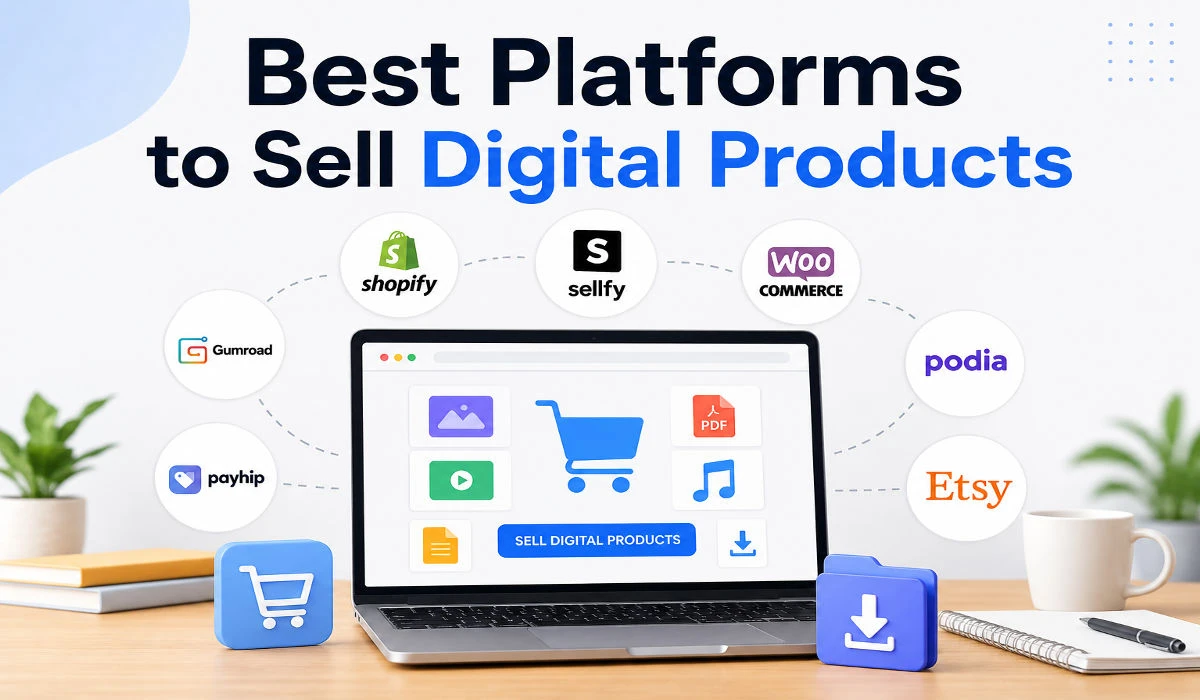
Choosing where to host your digital assets is as important as the product itself. In 2026, the marketplace landscape has shifted toward platforms that handle complex global taxes (VAT) and offer one-click checkouts. Whether you are selling AI prompts, e-books, or software, finding the Best Platforms to Sell Digital Products is the first step toward building a sustainable income.
In this guide, we evaluate the top contenders based on fees, user experience, and technical capabilities.
The King of Simplicity
When people search for the Best Platforms to Sell Digital Products, Gumroad is often the first name that appears. It remains a favorite for creators who want to start selling in under five minutes.
- Pros: Extremely easy setup, built-in email marketing, and a dedicated “Discovery” marketplace.
- Cons: Higher transaction fees (flat 10%) compared to some competitors.
Gumroad is ideal for artists, writers, and niche creators who value speed over complex customization.
The “Merchant of Record” Leader
In 2026, LemonSqueezy has become one of the Best Platforms to Sell Digital Products because it acts as a “Merchant of Record.” This means they handle all global sales tax and VAT compliance for you, which is a massive relief for international sellers.
Key Feature: Beautiful, high-converting checkout overlays that integrate perfectly with any website.
Pricing: Competitive fees with powerful subscription management tools built-in.
Shopify + Digital Downloads App
For those who want to build a full-scale brand, Shopify is frequently cited as one of the Best Platforms to Sell Digital Products. By using the “Digital Downloads” app, you can turn a Shopify store into a digital powerhouse.
- Why it works: Total control over branding, SEO, and app integrations.
- Best for: Sellers who have multiple product categories and want a professional, standalone storefront.
The Organic Traffic Powerhouse
If you don’t have an audience yet, Etsy is arguably one of the Best Platforms to Sell Digital Products. Unlike other platforms where you must drive your own traffic, Etsy’s search engine brings buyers to you.
High Demand on Etsy: Planners, Lightroom presets, and digital wall art.
Strategy: Use Etsy to find your initial customers, then migrate them to your own domain on digivibess.com.
The Budget-Friendly Alternative
Payhip is consistently ranked among the Best Platforms to Sell Digital Products for those who are conscious of profit margins. They offer a “Forever Free” plan where you only pay a small transaction fee when you make a sale.
Features: Supports e-books, software, and even memberships.
Bonus: They also handle UK & EU VAT, making it a safe choice for European markets.
The Social Media Choice
For creators driving traffic from TikTok or Instagram, Stan Store is emerging as one of the Best Platforms to Sell Digital Products. It is optimized specifically for mobile “Link in Bio” checkouts.
Why it converts: The checkout process is incredibly fast, minimizing the chance of a customer changing their mind.
Teachable and Thinkific
If your digital products are primarily video courses, the Best Platforms to Sell Digital Products are specialized Learning Management Systems (LMS) like Teachable.
Focus: These platforms provide a professional student dashboard, progress tracking, and quiz features that a standard PDF seller doesn’t need.
Self-Hosting with WooCommerce
If you want 100% ownership and 0% platform fees, self-hosting via WordPress and WooCommerce is the gold standard. While it requires more technical setup, it is often called one of the Best Platforms to Sell Digital Products for advanced marketers who want to own their data and customer journey entirely.
Read More: How to Build a Digital Product Store That Converts
Creative Market
When it comes to high-end design assets, Creative Market is consistently one of the Best Platforms to Sell Digital Products. Unlike general marketplaces, this platform is curated, meaning your products must meet a certain quality standard to be accepted. For sellers of fonts, website themes, and complex vector illustrations, the premium audience here is willing to pay much higher prices than they would on Etsy or Fiverr.
For Recurring Content Creators
If your digital products are released on a schedule, Patreon is one of the Best Platforms to Sell Digital Products using a membership model. It is perfect for creators who sell early access to videos, monthly wallpaper packs, or exclusive Discord roles. The “Tiered” system allows you to provide different levels of digital value to different segments of your audience, ensuring a steady monthly paycheck.
The All-in-One Creator Storefront
Podia is rapidly becoming one of the Best Platforms to Sell Digital Products for those who want to replace five different tools with one. It combines e-mail marketing, website building, and digital product hosting in a single dashboard. If you are tired of paying for a separate email service and hosting platform, Podia offers a streamlined, “clean” aesthetic that converts very well for professional coaches and educators.
The Low-Fee Alternative for Small Assets
For creators who sell smaller digital items like stickers, “buy me a coffee” style tips, or small PDFs, Ko-fi is one of the Best Platforms to Sell Digital Products because they take 0% platform fees on basic sales. It integrates beautifully with social media profiles and allows you to set up a “Shop” tab in minutes. This is the ideal starting point for hobbyists transitioning into professional selling.
The New Giant for “Digital Access”
In 2026, Whop has emerged as one of the Best Platforms to Sell Digital Products that involve community or software access. Originally popular in the trading and gaming niches, it is now used for selling access to private Telegram groups, SaaS tools, and Discord communities. Its modern UI and extremely fast checkout process make it a favorite for Gen Z entrepreneurs and tech-focused sellers.
The Scalable Global Solution
If you are moving beyond being a “solo creator” and into a small software company, Paddle is one of the Best Platforms to Sell Digital Products. Similar to LemonSqueezy, they act as your Merchant of Record, but they offer even more robust tools for handling B2B (business-to-business) sales, invoices, and complex subscription billing. It’s the “pro” choice for those who need a bulletproof global financial infrastructure.
FAQ
1. Which platform is best for a complete beginner?
Gumroad or Payhip are the best starting points because they require zero upfront cost and very little technical knowledge.
2. Is it safe to sell on multiple platforms at once?
Yes! Many creators use Etsy for organic traffic and LemonSqueezy on their own blog (digivibess.com) to maximize their reach and profit.
3. What is a “Merchant of Record” (MoR)?
An MoR like LemonSqueezy or Paddle takes legal responsibility for every transaction, including tax collection, which protects you from international legal issues.