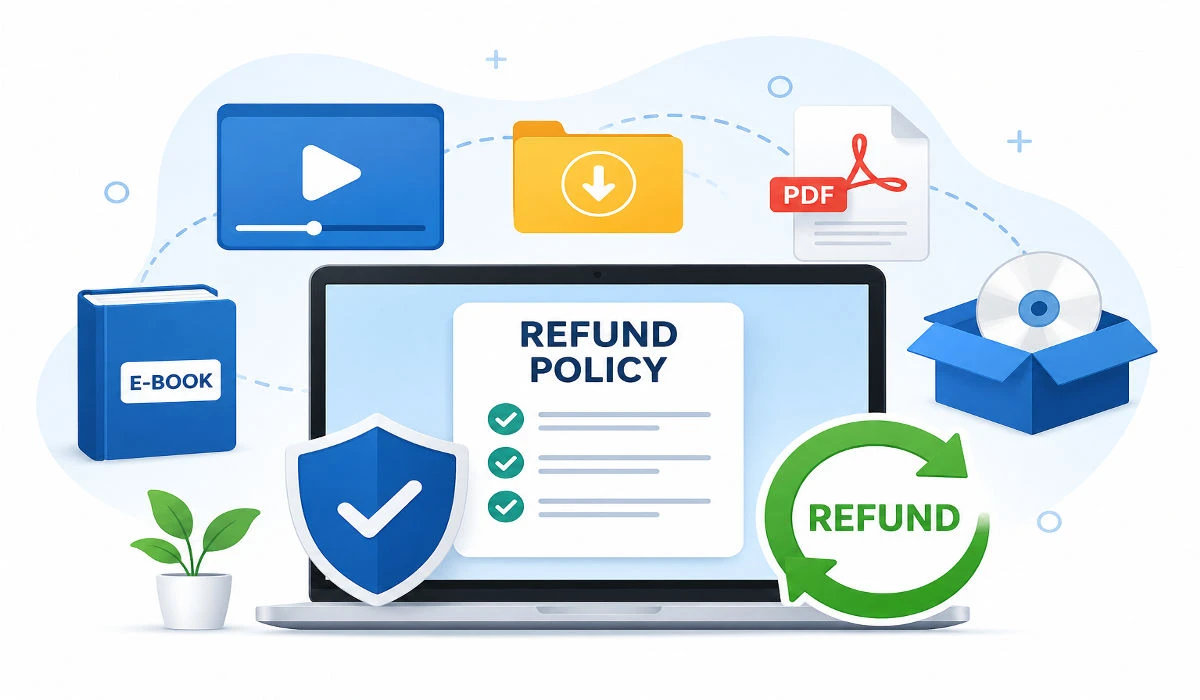
The digital download business model provides incredible financial freedom, allowing creators and developers to sell virtual products globally with zero shipping delays, manufacturing costs, or inventory storage issues. From high-end WordPress themes and custom code frameworks to interactive Notion dashboards and informative e-books, the scaling potential is completely unmatched.
However, selling virtual assets introduces unique operational risks that physical retailers never have to face. Because a digital file cannot be physically returned or wiped from a customer’s local hard drive upon processing a return, digital storefronts are highly vulnerable to friendly fraud and chargeback exploitation. Having clear, legally sound Digital Product Refund Policies Explained on your website is the single most effective way to protect your profit margins, satisfy your merchant gateways, and establish firm boundaries with your customer base.
This definitive guide will break down the essential consumer laws, refund frameworks, and technical safety tools required to keep your digital download business fully protected in 2026.
Why Physical Retail Return Frameworks Fail Digital Merchants
The fundamental reason many online sellers experience severe payment disputes is that they copy a generic return policy from a physical product marketplace. In physical retail, a return means the customer ships a tangible item back to your warehouse, allowing you to resell it to another buyer.
When you look at Digital Product Refund Policies Explained, the entire transactional logic changes completely. The moment a user clicks your checkout link, your server automatically emails a downloadable file or generates a secure access token. Once that asset is in the consumer’s possession, there is no technical method to force them to return or delete it. Therefore, relying on standard e-commerce return logic leaves you entirely exposed to bad actors who download your best templates and immediately request their money back, knowing they get to keep the files for free.
Core Operational Models for Digital Return Frameworks
When designing your storefront infrastructure, you must select an explicit operational model that balances customer satisfaction with strict asset security. To help you choose the right path, here are the primary types of Digital Product Refund Policies Explained:
A. The “All Sales Are Final” Model
This is the most common framework used by premium digital download marketplaces. This structure states explicitly that because items are delivered instantly and are completely intangible, all purchases are final upon generation of the download link. This model provides the ultimate protection against digital piracy and asset harvesting, making it ideal for source code, graphic element kits, and editable design templates.
B. The Condition-Based / Technical Error Model
This framework acts as a middle ground for complex technical products like software applications, web themes, or SaaS scripts. Under this model, you state that refunds will only be considered if the file possesses a verified technical bug or system conflict that prevents it from running properly on the buyer’s server. To qualify for a return under this section, the customer must submit a formal support ticket and allow your development team a set period (such as 48 to 72 hours) to fix the issue before a refund is officially approved.
Read More: Terms & Conditions for Digital Product Websites
Safe Storefront Policies vs. High-Risk Compliance Traps
To ensure your digital platform is completely insulated from payment gateway penalties and chargeback disputes, use this structural matrix to review your refund parameters:
Legally Protected Storefront Frameworks
Click-Wrap Terms Mandatory: Forcing users to check a box acknowledging that all download sales are final before processing payment.
Documented Technical Scope: Explicitly requiring buyers to submit server error logs to qualify for condition-based technical returns.
Expiring Access Strings: Utilizing automated delivery configurations that limit access windows to prevent file link redistribution.
High-Risk Storefront Pitfalls
Vague “Satisfaction Guarantees”: Offering absolute money-back promises on downloadable assets without any verification requirements.
Hidden Return Policy Links: Keeping your return text buried deep in a footer link without getting active customer agreement during the checkout phase.
Ignoring International Laws: Operating without a clear acknowledgment of region-specific consumer protection directives, such as EU cooling-off rules.
Navigating International Consumer Protection Laws and EU Regulations
An incredible benefit of virtual commerce is your ability to secure international clients instantly. However, accepting global payments means your Digital Product Refund Policies Explained must explicitly account for region-specific consumer protection directives, particularly those enforced within the European Union (EU) and the United Kingdom (UK).
Under standard EU consumer law, physical buyers enjoy a mandatory 14-day “cooling-off” period where they can return any online purchase for a full refund without justification. However, the law provides a critical exemption for virtual content. To keep your store fully compliant, your terms must state that by clicking the download link or accessing the virtual asset, the European buyer explicitly consents to immediate delivery and waives their statutory 14-day right of withdrawal.
How to Drastically Reduce Chargebacks with Transparent Customer Tracking
When an unhappy or fraudulent customer bypasses your store entirely and files an unauthorized chargeback with their credit card company or digital wallet, your payment processor will demand strict transactional proof to resolve the issue.
To successfully defend your revenue during these disputes, your website’s Digital Product Refund Policies Explained must match your automated backend server logs. Your system should track and archive the exact timestamp, IP address, and unique user token associated with every download action. If a buyer files an “unauthorized transaction” dispute but your hosting records show they clicked the delivery link three times within ten minutes of checkout, presenting these log files alongside your prominent return terms ensures that payment processors like Stripe or PayPal rule in your favor.
Crafting a Seamless Customer Support Funnel to Overcome Refund Requests
Oftentimes, a buyer requests a refund not because they are trying to steal your intellectual property, but because they are feeling frustrated with an asset installation or system setup process.
An essential strategy within Digital Product Refund Policies Explained is integrating a responsive technical support desk directly into your cancellation workflow. When a customer reaches out to ask for their money back, configure your contact portal to automatically prompt them to describe the technical issue they are experiencing. By resolving their setup errors, providing helpful documentation, or offering to jump on a quick support call, you can successfully turn a potential refund or chargeback into a highly satisfied, long-term customer relationship.
Managing Forced System Modifications and Product Discontinuation
Because digital software frameworks, web environments, and content delivery plugins evolve at an incredibly fast pace, an asset you publish today might become completely incompatible with external software updates a few years from now.
To protect your brand from historical liability, comprehensive Digital Product Refund Policies Explained must clearly address product lifecycles and deprecation. State explicitly within your text that refunds will not be granted for older versions of assets that fail to run on newly updated third-party frameworks. Clarify that while you strive to provide regular updates, the responsibility of verifying compatibility with modern hosting platforms sits squarely with the buyer prior to finalizing their transaction.
Rules for Automated Recurring Billing and Membership Portals
If your digital storefront relies on ongoing monthly subscription pools or membership dashboards rather than simple one-time file downloads, your return guidelines require an extra layer of clarity.
Within a structure of Digital Product Refund Policies Explained, you must clearly state that recurring subscription charges are completely non-refundable once processed. Outline the strict rule that cancellation requests must be submitted through the user profile dashboard at least 24 to 48 hours before the next automated billing cycle initiates. Clarify that upon cancellation, the user retains access to the download library until their active paid cycle officially concludes, after which their access tokens are instantly deactivated.
FAQ
Q1. Can a customer legally force a refund on a digital file if they claim they bought it by mistake?
Ans: Not if your checkout system uses a mandatory click-wrap checkbox where they must actively check a box agreeing to your strict “All Sales Are Final” policy before making a payment.
Q2. Do payment processors look at a website’s refund policy during a customer dispute?
Ans: Yes. If a customer files a chargeback, payment providers will audit your site’s terms. Showing that you have visible, compliant, and actively accepted terms will significantly improve your chances of winning the dispute.
Q3. What is “friendly fraud” in a digital product storefront?
Ans: Friendly fraud occurs when a legitimate customer purchases a digital product, downloads the asset files to their local device, and then falsely claims to their bank that they never authorized the purchase or that the file was never delivered, simply to get a refund while keeping the file.
Conclusion
Building an incredibly profitable, high-performing digital product website requires a smart balance of creative design production, targeted search engine marketing, and robust storefront security. Taking shortcuts with your site’s operational rules might save you a little time initially, but it leaves your entire revenue system vulnerable to piracy, chargeback penalties, and sudden merchant shutdowns down the road.
By consistently applying the core strategies highlighted throughout this manual on Digital Product Refund Policies Explained—by deploying explicit no-refund models, securing mandatory click-wrap confirmations, logging user download actions, and outlining clear membership cancellation rules—you construct an unshakeable shield around your digital download brand. Invest the necessary time into building a legally secure operational foundation, protect your creative capital, and watch your online storefront scale securely and sustainably for years to come.