The digital marketplace has expanded at an unbelievable pace. Whether you are looking for premium WordPress themes, advanced Notion productivity dashboards, specialized e-books, or automated AI prompt packs, there is an intangible file ready for instant download to meet your exact needs.
However, because you cannot physically touch, hold, or test these assets before your credit card is charged, the digital buying experience carries unique risks. Sifting through the thousands of options to find high-value, secure items can feel overwhelming. Learning How to Choose the Right Digital Product Before Buying is an essential skill for creators, entrepreneurs, and remote professionals who want to protect their hard-earned money and secure their devices.
This in-depth guide covers the critical steps you must take to evaluate digital goods, verify seller credibility, understand complex licensing, and pick the perfect asset for your project.
Why Digital Product Shopping Requires a Different Strategy
When you buy a physical product, like a laptop or a pair of shoes, you can look at unboxing videos, check physical build materials, and rely on standard consumer return laws if it arrives broken.
Digital downloads do not work this way. Because a digital file can be instantly copied and kept forever, most digital marketplaces enforce strict “No Refund” policies. Once you click that download link, your money is spent. This makes understanding How to Choose the Right Digital Product Before Buying incredibly important. If you buy a buggy website template or an outdated software plugin, you are usually stuck with the loss.
Define Your Exact Project Requirements First
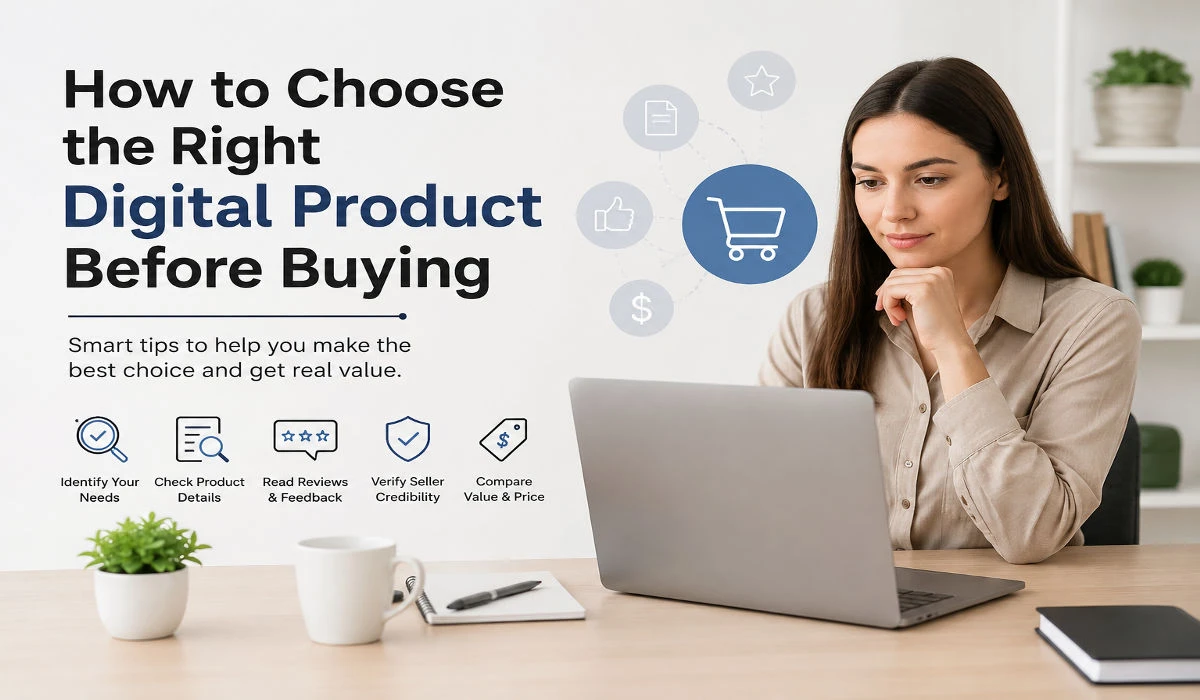
The absolute first step in How to Choose the Right Digital Product Before Buying is mapping out your specific needs. It is easy to get distracted by flashy sales pages and massive bundles that promise to solve all your problems, but buying more than you need leads to digital clutter and wasted capital.
Before browsing platforms like Etsy, Creative Market, or AppSumo, answer these questions:
What specific problem am I trying to solve? (e.g., “I need to organize my business clients,” or “I need a fast-loading portfolio page.”)
What is my technical skill level? If you buy a complex developer script but do not know how to read JavaScript, that premium product is useless to you.
What software ecosystem do I use? Ensure the product is explicitly compatible with your tools (e.g., a template built for Figma will not work smoothly in Adobe Photoshop).
Read More: Where to Buy Affordable Digital Downloads Safely
Analyze the Seller’s Authority and Reputation
In the digital asset space, anyone can set up a storefront in five minutes. To master How to Choose the Right Digital Product Before Buying, you must learn to separate industry experts from low-effort resellers.
Red Flags to Avoid:
The “Ghost” Shop: A storefront that has thousands of sales but zero social media footprint, zero documentation, and no linked portfolio.
Copy-and-Paste Storefronts: If you see the exact same product image being sold by five different stores on the same marketplace, it is a sign of stolen or pirated assets.
Signs of a Premium Creator:
Detailed Documentation: Reputable sellers include clear instructions, video tutorials, or “Read Me” files explaining exactly how to install and use their product.
Active Support Channels: Check if the seller responds to community comments, has a dedicated support email, or offers a live Discord/Slack community for buyers.
Master the Art of Reading Digital Reviews
Reviews are your strongest shield when figuring out How to Choose the Right Digital Product Before Buying. However, you cannot just trust the overall star rating, as bot networks can easily inflate those numbers.
How to Evaluate Feedback Safely:
Filter by Lowest Rating: Always look at the 1-star and 2-star reviews first. Look for patterns. If multiple buyers complain that “the code is broken” or “the PDF is full of grammar errors,” stay away.
Look for Specificity: Real users leave detailed reviews. A review that says “This completely fixed my website speed issue and saved me 4 hours” is highly trustworthy. A review that simply says “Great product” repeated 50 times could be artificial.
Check Review Recency: A software tool might have thousands of 5-star reviews from two years ago, but if the latest reviews say it no longer works with modern browser updates, the item is effectively abandoned.
Understand the License Tiers
An often overlooked aspect of How to Choose the Right Digital Product Before Buying is the legal fine print. When you buy a digital product, you aren’t actually buying the file itself—you are buying a license to use that file under specific conditions.
Using an asset incorrectly can result in copyright strikes, takedown notices, or legal fines for your business. Always check for these three main tiers:
A. Personal Use License
This is the cheapest option. It allows you to use the template, font, or graphic for your own private projects. You cannot use it to make money, use it on a client’s website, or print it onto merchandise to sell.
B. Commercial Use License
If you are running a business or building content for clients, this is the standard tier you need. It allows you to use the asset in projects that generate revenue, though it usually limits the use to one specific project per purchase.
C. Extended Commercial / Resell Rights
The most expensive tier. This allows you to integrate the asset into a product you sell repeatedly to others, or rebrand the file entirely to sell as your own digital download.
Run Technical and Security Pre-Checks
Even when shopping on major, well-secured marketplaces, your personal cybersecurity should remain a top priority. Part of knowing How to Choose the Right Digital Product Before Buying involves preparing your system for the download.
Essential Security Protocols:
- Never Download Direct .EXE Files Blindly: Unless you are buying software from a fully verified brand (like a known SaaS on AppSumo), be incredibly cautious of executable files, as they can easily hide malware.
- Insist on Secure Platforms: Only input your credit card or payment data on sites that use trusted payment gateways like Stripe, PayPal, or certified Merchant of Record platforms like Gumroad and Payhip.
- Utilize Sandboxed Previews: For website themes or templates, look for platforms that offer a live click-through demo hosted on their own servers so you can test the functionality before saving any files to your desktop.
Post-Purchase Asset Management and Technical Compatibility
A final, yet often neglected, factor in learning How to Choose the Right Digital Product Before Buying is evaluating how the asset will be managed after the transaction is complete. Many buyers assume that once a file is downloaded, the process is completely finished. However, long-term technical compatibility can quickly become an issue if you do not check how the creator delivers future updates.
When you discover How to Choose the Right Digital Product Before Buying, you must look at whether the platform or creator provides a central dashboard where you can redownload your files. If a software plugin updates or a template structure changes to meet 2026 web standards, you need a hassle-free way to access the updated version. Buying from individual sellers who send a single, un-updateable email link can leave you stranded with a broken file a few months down the road.
Additionally, understanding How to Choose the Right Digital Product Before Buying involves checking the file organization system. Premium digital products usually come inside a cleanly structured ZIP file that contains clear naming conventions, version histories, and specific installation folders. If a product description does not explicitly mention organized asset management or lifetime access to future updates, it is a strong indicator that the download might cause technical friction later on.
FAQ
Q1. Can I get a refund if a digital product doesn’t meet my expectations?
Ans: On most platforms, refunds are extremely rare unless the product is completely broken, corrupted, or explicitly misrepresented by the seller. This is why learning How to Choose the Right Digital Product Before Buying via reviews and live demos is so critical before finishing your purchase.
Q2. Is it safe to buy massive digital asset bundles?
Ans: Be cautious of “10,000-in-1” graphic or prompt bundles sold for incredibly low prices (like $2). These packages are frequently filled with low-quality, outdated files, or stolen assets harvested from other creators, which could expose you to copyright issues.
Q3. How do I know if a digital product is updated for 2026 standards?
Ans: Look at the product description page for a section labeled “Changelog” or “Last Updated.” If the creator lists detailed update notes tracking modern web compatibility, you can purchase with confidence.
Conclusion
Investing in the right digital files can skyrocket your productivity, give your website an ultra-professional look, and save you hundreds of hours of manual labor. However, a successful purchase requires moving away from impulsive clicking and adopting a methodical approach.
By understanding your exact project scope, deeply analyzing seller documentation, verifying low-tier reviews, and confirming your legal license, you can confidently master How to Choose the Right Digital Product Before Buying.
Protect your workflow, support dedicated creators who keep their assets updated, and build a high-performance digital toolkit that helps your business grow smoothly.